
Rasps - Files - Saws
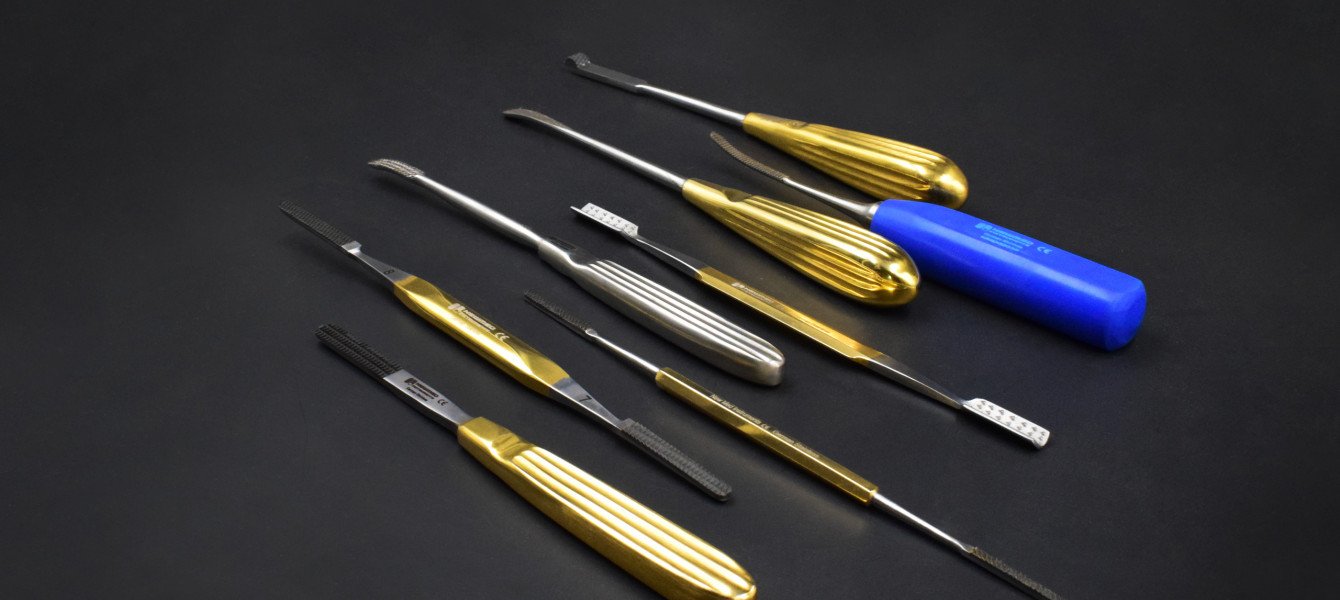
Rasps, Files and Saws
Rasps, files, and saws are surgical instruments that are used for cutting, shaping, contouring, and smoothing bone and cartilage in surgical procedures like rhinoplasty. The fine tips and sizes of these tools allow the required control for contouring and reshaping cartilage and bone tissues.
Newmed's rasps, files, and saws in German stainless steel with narrow shafts and special ends offer you the best results.
Nasal Rasps, Files and Saws for Rhinoplasty
In rhinoplasty procedures, nasal rasps and sharp blades are required for accurate cutting and reduction of the bone tissues. These instruments allow accuracy with their fine construction and controlled handling in deep cavities for osteotomy.
Rasps, Files and Saws Chart
| Instrument | Configuration | Uses |
| Rhinoplasty rasp | Features a slim profile created for access around the nasal dorsum. | Used for dorsal contouring and refinement. |
| Nasal rasp | Features a narrow shaft with a toothed working surface for controlled filing. | Used for gradual reduction and smoothing of the nasal bone. |
| Tungsten-carbide nasal rasp | Used for efficient bone cutting and finishing. | Features strong and sharp serrations for controlled contouring. |
| Diamond nasal rasp | Features a fine diamond-coated coarse surface for fine bone refinement. | Used for smoothing smaller bony irregularities. |
| Fomon rasp | Features a narrow nasal profile with a textured working surface. | Used for controlled contouring of the dorsal and nasal bones. |
| Aufricht rasp | Features a specialized nasal rasp profile for precise bone work. | Used for efficient bone cutting and finishing. |
| Cakir rasp | Features a specialized cutting surface intended for controlled nasal reshaping. | Used for dorsal reduction and refinement. |
| Maltz rasp | Features a compact working end suited to nasal bone contouring. | Used for controlled reduction during rhinoplasty. |
| Push-pull nasal rasp | Features a cutting surface designed for forward and backward filing movements. | Used for controlled smoothing and reduction. |
| Bone file | Features a fine filing surface for controlled bone finishing. | Used to smooth and refine accessible bony edges. |
| Nasal saw | eatures a narrow serrated blade for controlled bone cutting. | Used for nasal osteotomies and bony reshaping |
| Joseph nasal saw | Features a slender nasal saw profile for access around the nasal framework. | Used for controlled nasal bone cuts. |
| Preservation rhinoplasty saw | Features a narrow cutting configuration for controlled osteotomy. | Used in selected preservation rhinoplasty approaches. |
How to Choose Nasal Rasps, Files, and Saws
- Associate the working end with the nasal area and procedure.
- Check the shaft length and profile to ensure access and visibility.
- Choose German stainless steel or tungsten carbide construction for proper reprocessing.
- Check the dimensions, sizes, and configurations.
- Build your personal set for more control in procedures.
Preservation Rhinoplasty and Bone Contouring
Instruments for preservation rhinoplasty are chosen depending on the technique used, and the elements are preserved during the procedure. The focus of preservation methods is on preserving the nasal structure.
With its plastic surgery instruments made from premium German stainless steel, NewMed offers autoclavable instruments designed for professional use. Check out these instruments online to complete your collection.
FAQs
Q1: Tungsten carbide vs diamond rasp: what’s different?
A tungsten carbide rasp is an operating instrument that consists of pointed edges to slice hard tissue. On the other hand, a diamond rasp is an identical instrument with rough sides used for reshaping bones.
Q2: What is a nasal rasp used for in a procedure?
A nasal rasp is an instrument that is used in a procedure to cut and contour the nasal bone and cartilage for a smoother finish.
Q3: Which instruments are used in preservation rhinoplasty and why?
The main surgical instruments that are used in preservation rhinoplasty are rasps, files, saws, osteotomes, and microsaws, etc.
Q4: Rasp vs osteotome for hump reduction: Which one should I get?
The instrument you choose depends on your procedure. A rasp is used to reshape bone, and an osteotome helps with fine cutting and removing parts of bone.


Model: NM-DI-788405
Watson Williams Antrum RaspNewMed® Brand New Watson Williams Antrum Rasp Useful for Nasal Reconstructive Procedures. Features an overall length of 17 cm or 23 cm with fine & coarse serrations. These Rasps Feature an ergonomic design Handle which contributes to reduced hand fatigue, allowing the ..
$69.00


Model: NM-DI-789353
Webster Glabella Rasp - Tungsten CarbideNewMed® Brand New Webster Glabella Rasp offers outstanding cutting capability for precise bone contouring. Features 6.0mm Wide and overall length 8-1/2" (21.5 cm) . Glabella Rasps feature Push/Pull Tungsten Carbide. Push/Pull" design allows for greater co..
$84.00


Model: NM-DI-788406
Wiener Antrum RaspNewMed® Wiener Antrum Rasp is useful in turbinectomy procedures. Features an overall length of 19 cm or 20 cm. The curved end of the rasp is used to enlarge bony openings such as the inferior meatus. The tips are available in trocar and blunt style. and tip length is 3 mm to 5 mm. ..
$69.00

Model: NM-DI-788375
Williger Elevator NewMed® Williger Elevator Curved - Raspatory. This Elevator offers a wide range of surgical advantages and Ideal tools in various surgical procedures. This Instrument is commonly used for lifting and separating soft tissues or periosteum. Its curved blade provides enhanced acc..
$67.00