
Mallets & Cartilage Instruments

Mallets and Cartilage Instruments
Mallets and cartilage instruments are surgical instruments that are used to impact and shape bone and cartilage in plastic surgery. A mallet is paired with crushers, morselizers, and grids to provide control during the procedure. They are heavy tools that help reshape nasal and facial structures with their different heads and grips in a rhinoplasty.
Newmed offers them in German stainless steel for the best results.
Types of Mallets and Cartilage Instruments
A mallet is a heavy surgical tool that is made to apply controlled impact to bone instruments like osteotomes chisels, and gouges. For instance, a rhinoplasty mallet is specific to nasal reconstructive procedures.
There are different types of cartilage graft instruments that are used according to the details of the surgery. Firstly, a cartilage morselizer is used to break the cartilage into tiny pieces for grafting procedures. On top of that, diced cartilage instruments like a cartilage cutting block help in harvesting, cutting, and shaping fine grafts for nasal bridge procedures.
Mallets and Cartilage Instruments Chart
| Instrument | Configuration | Uses |
| Cottle Bone Crusher | Features either a smooth or serrated surface. | For crushing cartilage to produce uniform graft material during rhinoplasty. |
| Jost (Gubisch) Cartilage Crusher | Features a benchtop ‘block-and-plate’ system to flatten and mold cartilage. | For modifying cartilage for nasal reconstruction. |
| Sheen Cartilage crusher/Morselizer | Features a surface with a smooth crushing area and longitudinal serrations. | For crushing and morselizing cartilage into small pieces during rhinoplasty. |
| Cartilage Cutting Block | Features a Teflon body with a tough, heavy-duty surface. | For providing a stable surface for cutting and cartilage grafts. |
| Sheen Cartilage Grid | Features a grid surface for measuring and organizing cartilage. | For supporting exact cartilage sizing for procedures. |
| Cottle Mallet | Features dual flat/round faces to dampen the impact. | For controlled impact with chisels and osteotomes. |
| Novotex Mallet | Features a dense non-metallic striking head (made of Novotex plastic or fiber) | For applying impact during bone-shaping procedures. |
How to Choose Mallets and Cartilage Instruments
The following factors need to be considered before getting mallets and cartilage instruments:
- Align the crusher’s head with the cartilage consistency and the tool of impact.
- Select a cutting block for a stable surface in grafting procedures.
- Choose a smooth or serrated surface for crushers.
- Choose the handle grip and length for comfortable movement.
- Select a reusable and autoclavable construction for reprocessing.
- Choose the required mallet weight for the procedures.
- Choose a German stainless steel build for reprocessing.
- For orders, confirm certifications of the manufacturer.
Pair Mallets and Cartilage instruments with Osteotomes and Chisels
Pair mallets and cartilage instruments with surgical osteotomes and chisels to provide control in bone reshaping surgeries. You can get these instruments in German stainless steel from NewMed to create a reconstructive set.
FAQs
Q1: What is a cartilage crusher used for?
A cartilage crusher is a surgical instrument that is used to compress the harvested cartilage fragments for specific grafting procedures.
Q2: What mallet weight is used for nasal osteotomy for controlled impact?
For a Cottle mallet, use a 300 g mallet; for a plastic or fiber Novotex mallet, use a 240 g mallet.
Q3: Can I get a cartilage crusher in stainless steel?
Yes. You can get cartilage crushers in German stainless steel from NewMed in different configurations and sizes.
Q4: What's different: Crushed vs. diced cartilage in rhinoplasty?
Crushed cartilage is compressed and flattened by a surgical crusher for contouring. Diced cartilage consists of small, uniform cubes that are used to enhance and build up the nasal bridge.


Model: NM-DI-788520
Doyen Bone MalletNewMed® Doyen Bone Mallet is frequently used to manipulate or reposition bones during craniofacial reconstruction, mandibular surgeries, or orbital bone repair. It can be combined with other instruments to gently reshape cartilage. 23 cm, 27 cm, and 38 cm overall length.During ..
$65.00
Model: NMD020217
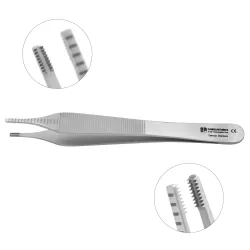
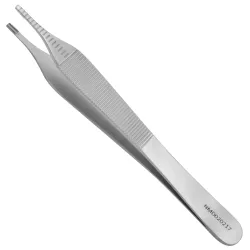
Adson Cartilage ForcepsNewMed® Adson Forceps having Brown Teeth features an overall length of 12cm. These forceps feature 2cm Markings from the tip of the forceps for measuring cartilage. These forceps can come in handy for surgeons in a variety of surgical procedures that require measurements or ma..
$91.00


Model: NM-DI-788340
Aiach-Gubisch cartilage forcepsNewMed® Aiach-Gubisch cartilage forceps. These forceps offer a wide range of surgical advantages and Ideal tool in Rhinoplasty and Reconstructive surgical procedures. This Instrument is commonly used for precise handling and manipulation of cartilage during reconstruct..
$109.99
Model: NM-DI-789256
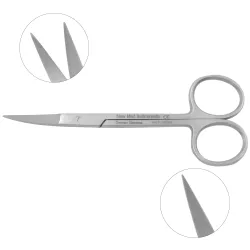
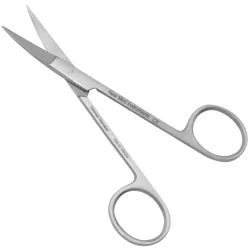
Alar Cartilage Scissors NewMed® Alar Cartilage Scissors, Curved. These scissors offer many surgical advantages and are ideal tools in rhinoplasty surgical procedures. This Instrument is commonly used for precision in reshaping and trimming alar cartilage in several surgical procedures..
$69.00


Model: NM-DI-788515
Bergmann MalletNewMed® Bergmann Mallet, 22.5cm, Solid Head, 570 grams, is often used to drive chisels or osteotomes during bone shaping or grafting procedures. The robust head enables accurate hits on a variety of tools used in harvesting or bone restoration. Micro-serrations are present on its hand..
$65.00


Model: NMD50010
Cartilage Cutting Block with MeasurementsNewmed® Cartilage cutting block, which is used for cutting autologous cartilage in defined-layered thicknesses. During surgery, the cartilage slices are prepared into struts. These supports are used to achieve the desired change in shape during Rhi..
$95.00


Model: NM-GRY-21
Cartilage Cutting Board NewMed® Cartilage Cutting Board is a multipurpose tool used in a variety of reconstructive procedures. The dimpled surface of the board allows for quick and precise molding of cartilage with minimal slippage. The size of the board offers plenty of room for an assortment ..
$47.00


Model: NM-DI-788517
Cervical MalletNewMed® Cervical Mallet, 23cm, Solid, 335 grams, is a precision-engineered orthopedic and neurology instrument used for cutting and shaping bone in cervical vertebrae procedures. This 23cm-long mallet provides increased leverage for the surgeon to gain better force transmission. It we..
$65.00
Model: NM-DI-788516
Cervical MalletNewMed® Cervical Mallet is often used to drive chisels or osteotomes for removing or shaping bone during reconstructive procedures. The solid head provides a consistent striking surface. The 215-gram head is lightweight and manageable size for precise work, allowing the surgeons ..
$65.00


Model: NM-DI-788518
Collin-Lucae Metal Mallet – Solid HeadNewMed®Collin-Lucae Metal Mallet – Solid Head, and 21cm provides an optimal balance between control and leverage. The robust head enables accurate strikes on various tools, such as chisels and osteotomes used in bone harvesting or repair, and the well-desig..
$85.00


Model: NM-DI-789392
Cottle Bone CrusherNewMed® Cottle Cartilage Crusher/Morselizer is useful for reforming soft tissue. Available on a smooth and serrated 15mm x 60mm surface. The purpose of the compact crusher is to produce homogenous cartilage that will smooth or conceal abnormalities in the nasal surface. The surgeo..
$49.00
Model: NM-DI-788408
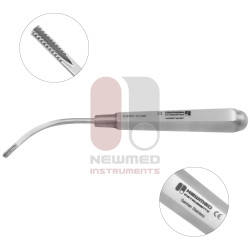
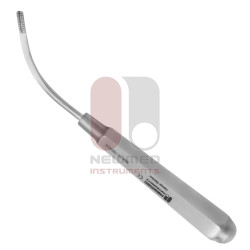
Dingman Cartilage AbraderNewMed® Dingman Cartilage Abrader - Curved. This Instrument offers a wide range of surgical advantages and Ideal tool in reconstructive and cosmetic surgeries. This Instrument is commonly used for reshaping and smoothing cartilage. It is especially helpful for treatment..
$73.00


Model: NM-DI-789255
Fomon Lower Lateral Cartilage ScissorsNewmed® Fomon Lower Lateral Cartilage Scissors, Strongly Curved. This Scissor offers a wide range of surgical advantages and Ideal tool in Rhinoplasty and Nasal reconstruction procedures. This Instrument is commonly used for dissecting and shaping the ..
$69.00


Model: GRY-NMD-101
Free Diced Cartilage TrocarNewMed® Free Diced Cartilage Trocar is commonly used in plastic and reconstructive surgery procedures for harvesting, preparing, and injecting diced cartilage into areas requiring cartilage grafting or augmentation. Features an application length of approximately 60m..
$97.00


Model: NM-DI-789360
Gorney Septal MorselizerNewmed® Gorney Septal Morselizer features one jaw that has a tungsten carbide insert to crush and reform cartilage into tissue for repositioning. The other jaw longitudinally cuts the cartilage without spreading. Overall length 8-1/2" (21.6 cm). 5.0 mm to 6.5 mm in width. Wor..
$140.00


Model: NM-DI-789357
Gunter Lower Lateral Morselizer NewMed® Gunter Lower lateral Morselizer Features 7" (18cm) overall length and is available in two unique jaw surfaces, which allow cartilage to be crushed or cut. Longitudinal Jaw Features semi-sharp ridges that cut longitudinally into a tungsten carbide ins..
$134.00


Model: NM-SI-2068
Heermann Mallet Newmed®Heermann Mallet 21.5 cm is a precision instrument for surgery that enables controlled impact while working with bone. This instrument is ideal for the forceful displacement of a chisel or osteotome and enables accurate cutting and shaping of the bone. Assists with the ext..
$71.99


Model: NM-GRY-5701351
Jost (Gubisch) Cartilage CrusherNewMed® Jost (Gubisch) Cartilage Crusher 65x30mm Surface Multi-surface are interchangeable to allow for a variety of possible results. Its multiple smooth, longitudinal, and cross-serrated surfaces indicate the size of the crushing area, which is large enough to ..
$84.00


Model: NM-DI-788262
Maltz cartilage knifeNewMed® Maltz cartilage knife with blade guard- angled 16cm is used in rhinoplasty for cutting, shaping, and trimming cartilage. During auricular reconstruction, it is used to shape and polish cartilage grafts that are utilized to restore the form of the ear. When working ..
$98.00


Model: NM-DI-788263
Masing cartilage knife NewMed® Masing cartilage knife features a curved blade and an overall length of 13cm with 4mm width. It is used for manipulation, shaping, or excision of cartilage during rhinoplasty, otoplasty, and facial reconstruction procedures. The sharp blade has been successfully ..
$67.80


Model: NM-DI-788241
McIndoe Scissors NewMed® McIndoe Rhinoplasty Scissors - straight, outer edges semi-sharp, serrated. This Scissor offers a wide range of surgical advantages and Ideal tool in Rhinoplasty surgical procedures. This Instrument is commonly used for Dissecting Nasal Cartilage. Features semi-sharp out..
$92.99


Model: NM-DI-789310
Novotex Fiber Plastic MalletNewMed® Novotex Fiber Plastic Mallet 26cm 150 grams, 35mm diameter, Reusable is made from a fiber material, which helps in absorbing shock and reduces the risk of trauma to soft tissues. It can be used for a variety of treatments, such as implant placement, ear reconstruc..
$85.00


Model: NM-DI-788268
Rubin Septal Morselizer Forceps NewMed® Rubin Septal Morselizer Forceps feature double-action Tungsten Carbide Serrated Jaws sized 17.0mm x 5.0mm and an overall length of 8” (20.3cm). They are employed in nasal reconstruction procedures to remove bone or cartilage from the septum. The jaws' thi..
$139.00


Model: NM-GRY-5734765
Sheen Cartilage Crusher/MorselizerNewMed® Sheen Cartilage Crusher/Morselizer with a 60mmx30mm surface area for crushing, morselizing, or milling cartilage into small pieces during rhinoplasty. It can process large amounts of cartilage effectively and efficiently. It is made to crush cartilage i..
$75.00


Model: NM-DI-788174
Sheen Cartilage ForcepsNewMed® Sheen Cartilage Forceps is a specialized surgical instrument that Plastic surgeons use in Plastic Reconstructive surgeries, specifically in Nasal cartilage procedures. These Forceps feature 6mm Wide Oval Fenestrated Jaws, and their overall length is 6-1/2" (165mm). Bay..
$69.00


Hot
Model: NM-DI-786640
Sheen Cartilage GridNewMed® Sheen Cartilage Grid is named after Dr. Sheen, a pioneering surgeon in nasal and facial reconstructive techniques. It is specifically made to help with the accurate dissection, measurement, and shaping of cartilage during nasal reconstruction procedures. It has ..
$67.00


Model: NM-DI-789010
Toffee MalletNewMed® Toffee Mallet is a specialized surgical instrument used in various medical fields, including orthopedics and neurosurgery. Feature 7 ½” (19cm) length, Head Size 22mm, Weight 165g/6oz. In addition to minimizing damage to cartilage, delicate tissues, and bones, the soft, plia..
$85.00


Model: NM-DI-789011
Ultra Fine MalletNewMed® Ultra Fine Mallet features a 6 ¾” (17cm) length, a Head Size of 20mm, a weight of 125g/5oz, and a Tufnol handle. It is perfect for use in lengthy procedures without hand fatigue because it is lightweight and manageable. During delicate surgical procedures, the exquisite craf..
$85.00
Showing 1 to 28 of 28 (1 Pages)